The Hidden Reason You Feel Anxious Before You Ride
You know the feeling, don't you? All day, you’ve been counting down the minutes until you can get to the barn. You’ve pictured yourself in the saddle, feeling the familiar rhythm of your horse, breathing in that unique scent of hay and leather. You genuinely love this animal, this sport, this space. The excitement builds, a gentle hum beneath the surface, promising solace and connection.
But then, something shifts. It might be when you’re pulling your boots on, or as you grab the tack, or even just the moment you put your foot in the stirrup. Suddenly, your shoulders creep up towards your ears. Your breath gets shallow, caught somewhere in your chest. A familiar tension begins to coil in your gut, your muscles bracing, even though nothing is actively happening. Your horse is standing calmly, the environment is peaceful, yet your body is on high alert. It’s confusing, it’s frustrating, and often, it makes you feel deeply ashamed because all you want is to be present and enjoy the ride.
You wonder what's wrong with you. Why can't you just "get over it"? You tell yourself to calm down, to be brave, to think positive thoughts. But the physical sensations persist, a stubborn undercurrent that undermines your best intentions. It’s not a conscious choice to feel this way; it feels like your body has betrayed your mind, leaving you stranded between desire and dread.
Here’s the hidden truth, and it’s a game-changer: This isn't a mindset problem. It’s a nervous system response. Your body isn't experiencing a moment of weakness; it's doing its job, just a little too enthusiastically. Somewhere along the line, perhaps due to a past fall, a near-miss, a sudden spook, or even just prolonged uncertainty, your nervous system learned to associate riding with potential threat. It slipped into what we call "protection mode," not because you're in immediate danger right now, but because it’s trying to keep you safe based on old data.
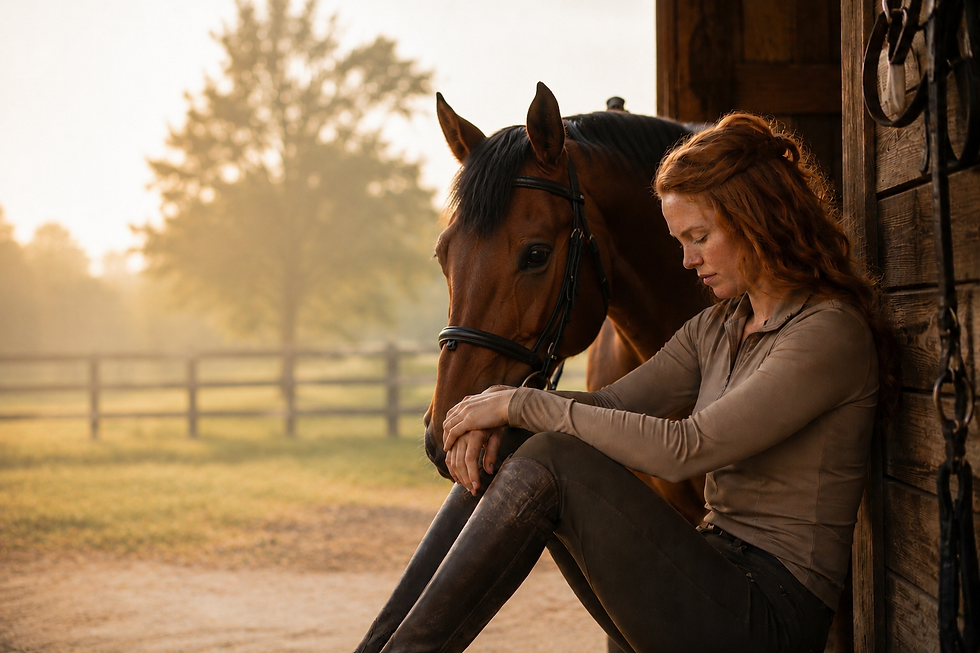
Think of it this way: your nervous system doesn't differentiate between "I'm about to get bucked off by a runaway horse" and "I'm just walking on a loose rein on a Tuesday afternoon." To this primal, protective part of your brain, a subtle shift in your horse's weight or an unexpected sound can trigger the same cascade of physical responses that once saved you from harm. It's a vigilant, well-meaning guardian, but its alarm system is a bit too sensitive, mistaking shadows for monsters.
Understanding this is the first crucial step. It means you’re not "broken" or lacking willpower. You're experiencing a biological default. And the whole game, the entire journey back to calm, connected riding, lies in gently guiding your nervous system out of protection mode and back into a state of connection and presence. This shift, the one that allows you to truly feel your horse beneath you without that pervasive internal bracing, starts long before your foot ever reaches the stirrup. It begins with awareness, compassion, and a set of tools designed to speak your body’s language.
This is exactly why the practices in these courses and workbooks matter. They aren’t about forcing bravery; they’re about rewiring safety. They’re about giving you the keys to understand and soothe your own biology, so you can return to the joy of riding, not just surviving it. You’re not alone in this, and you are far more capable of this transformation than you might currently believe.

Comments